
In-Plant & In-Home Rug Cleaning in Nashville
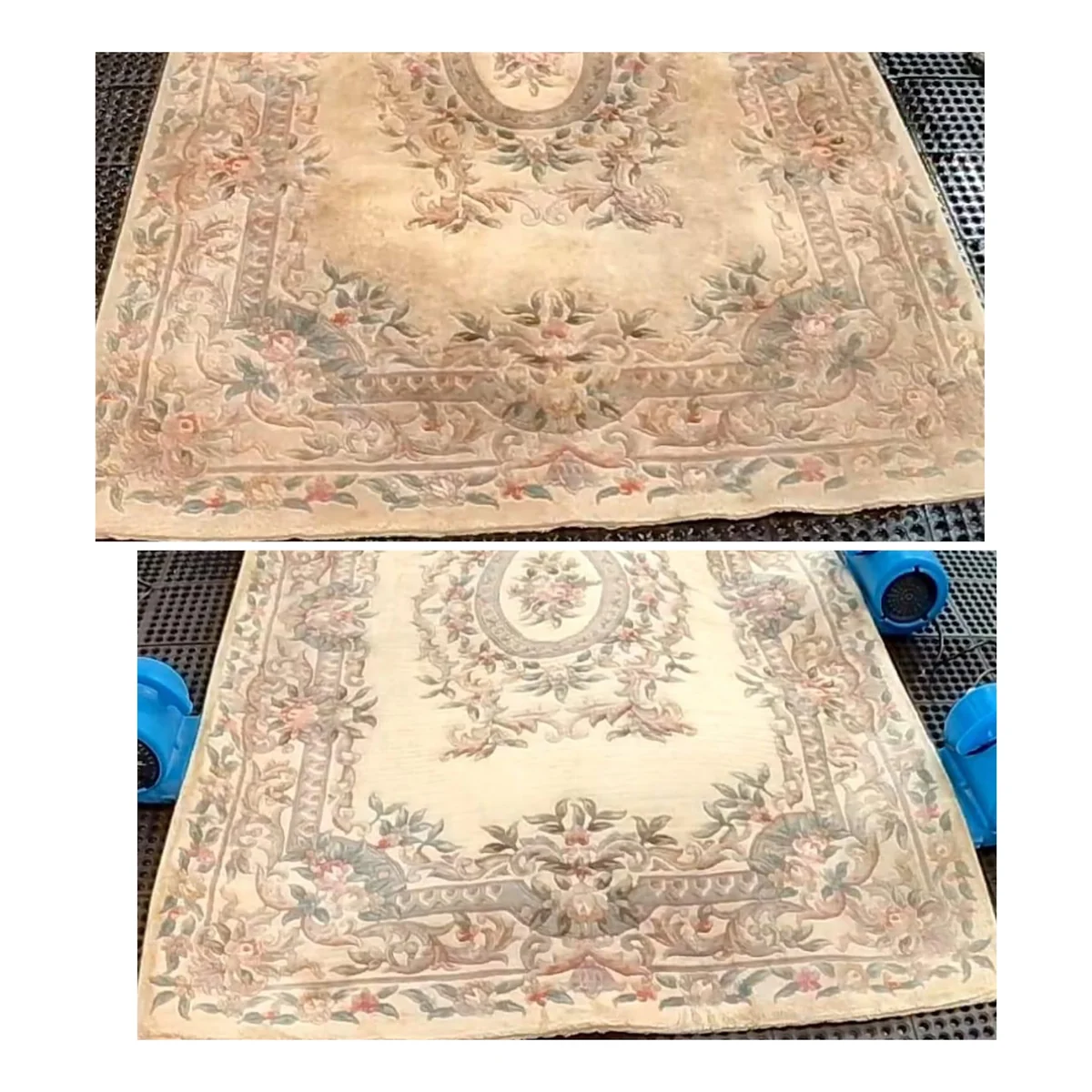
A rug can look clean on top while its foundation holds grit, old pet accidents and soap left behind by past cleanings. Silk & Shine Rug Spa is the in-plant rug cleaning facility of Deep Steam Floor Care & Restoration. We pick up your rug, bring it to our wash floor and clean it in ways a living room floor never allows: deep dusting, controlled washing selected for the rug, including full washing and flushing where appropriate, a flood-and-flush treatment for pet urine and controlled drying. More than 8,000 clients have trusted Deep Steam with their floors, and our rug cleaning in Nashville and across Middle Tennessee starts with an honest look at your rug: we’ll always tell you what can realistically be improved before we start. Our technicians are certified in wool and rayon/viscose textile care.
Certified in Wool & Rayon/Viscose Textile Care
Wool, viscose, rayon and specialty fibers require different cleaning decisions than ordinary synthetic carpet. Our training helps us evaluate fiber characteristics, dye stability, moisture sensitivity and drying requirements before selecting the cleaning method.
Cleaning is selected based on the rug's fiber, construction, dyes and condition. Full washing and flushing are used where appropriate.
- Wool Care Certified
- Rayon / Viscose Care Certified
- Dye testing before washing
- Controlled drying at our facility
Transparent Pricing. No Guessing.
In-plant rug cleaning at Silk & Shine Rug Spa is listed in our online price book. Size, fiber, construction, condition and any urine or stain treatment can change the price, and we confirm it after inspection, before any cleaning starts. Optional fabric protector for rugs: $0.75 per sq ft for synthetic rugs, $1.00 per sq ft for wool or handmade rugs ($25 minimum).
- $4In-plant rug cleaningper sq ft
- $175Appointment minimumper visit
- Pickup& return deliveryscheduled when you book
See How We Wash Rugs at Silk & Shine Rug Spa
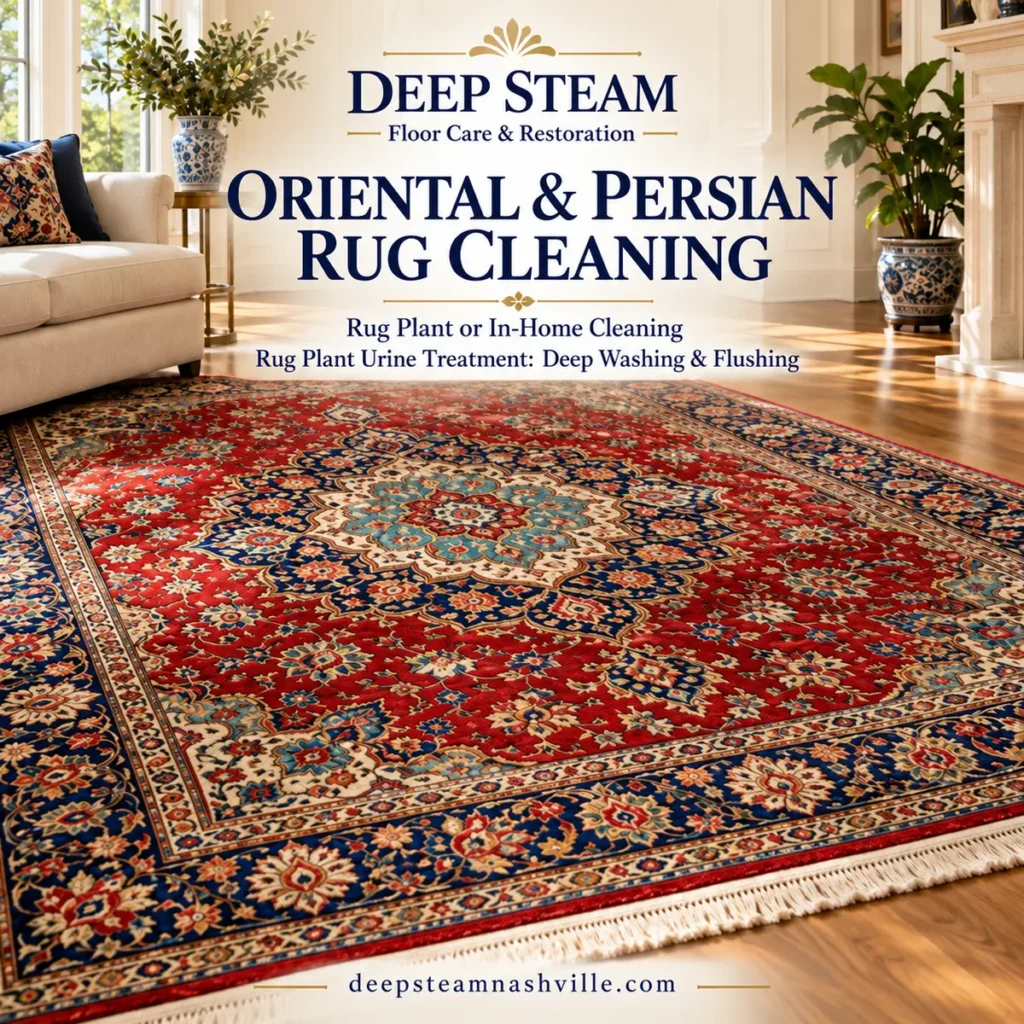
Why In-Plant Rug Cleaning Beats Cleaning on the Floor
Wall-to-wall carpet has to be cleaned where it lies. A rug can travel, and that changes what’s possible. In-home rug cleaning is more limited because the rug remains over the floor and cannot be fully dusted, flushed and dried the same way as it can in a dedicated rug-cleaning facility. Grit stays packed in the knots, urine stays in the foundation and pad, and any water that soaks in has to dry slowly against a pad or hardwood floor. Slow drying is when dyes run and brown stains wick up.
At Silk & Shine Rug Spa we can:
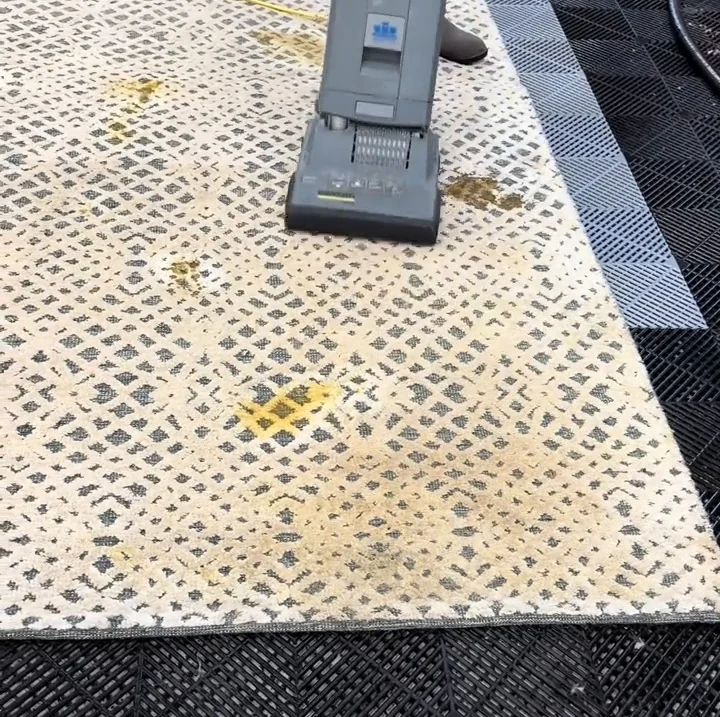
- Remove the dry soil and grit vacuums leave behind before any water touches the rug
- Wash the face, foundation and back where the rug allows it, not just the tips of the pile
- Flood and flush urine out of the foundation where appropriate, instead of covering it up
- Rinse until the residue is gone, so the rug doesn’t re-soil quickly
- Dry the rug evenly under controlled conditions, away from your floors and furniture
- Groom the pile and fringe before the rug goes home
Pickup, Cleaning & Delivery Made Simple
Schedule pickup
Book online or call (615) 482-5590. Photos of the front, back and any tag help us plan.
Inspection
At our facility we identify the fiber and construction, test the dyes and note stains, wear or pet damage. If anything changes the plan, we contact you first.
Cleaning
Dusting, pre-treatment and a wash method selected for the rug, with full washing and flushing where appropriate.
Controlled drying
The rug is dried evenly under controlled conditions to help keep dyes from moving.
Final inspection
We check the front, back and fringe before the rug leaves the facility.
Return delivery
Your rug is rolled, wrapped and brought back to your home.
Rugs We Clean in Nashville and Middle Tennessee
Our Nashville rug cleaning team identifies each rug’s fiber and construction before choosing a method.
Oriental and Persian Rugs. Persian, Turkish, Indian, Chinese, tribal and other Oriental rugs are usually hand-knotted wool on a cotton or wool foundation. Heirloom pieces may have natural dyes, earlier repairs or color changes. These rugs get a full inspection and dye test before they go anywhere near water.
Hand-Knotted Rugs. In a hand-knotted rug, each knot is tied around the warp threads, and the fringe is the end of those threads, not a trim sewn on later. Their dense pile hides a lot of soil and needs thorough dusting before washing.
Hand-Tufted Rugs. Hand-tufted rugs look hand-knotted from the front, but the yarn is punched through a canvas and held with latex under a cloth backing. Pet urine and repeated wetting can break down that latex, causing a sour smell, stiffness or a backing that separates. We check the backing first and tell you if it’s already failing.
Wool Rugs. Wool is the most common fiber in quality rugs. It hides soil well, which is why a “clean-looking” wool rug often gives up a surprising amount of dirt during dusting. Wool doesn’t tolerate harsh, high-alkaline cleaners or high heat, so we use gentle solutions made for natural fibers.
Silk Rugs. Real silk is strong when dry but more fragile when wet, and silk dyes can be unstable. We wash silk only when testing shows it’s safe; sometimes the honest recommendation is dusting and spot care only.
Viscose and Art Silk Rugs. Viscose, also sold as “art silk,” “bamboo silk” or “faux silk,” is a plant-based fiber made to look like silk. It loses much of its strength when wet, can yellow or brown easily, and has often already lost pile in traffic areas. We explain these risks in plain language before you decide, and we never treat viscose like wool.
Flatweave and Kilim Rugs. Kilims, dhurries and other flatweaves have no pile, just tightly woven colored yarns. They are often reversible and use bold, contrasting colors, which makes dye bleeding the main concern. Dye testing and fast, even drying matter most for these rugs.
Synthetic Rugs. Nylon, polypropylene (olefin) and polyester rugs, including most machine-made designer rugs, are durable and usually colorfast. Polypropylene tends to hold oily soil, so these rugs get a thorough pre-treatment. Many synthetic rugs can also be cleaned well in your home.
Our In-Plant Rug Cleaning Process, Step by Step
Our in-plant process has ten steps. Each one is selected and adjusted for the rug’s construction, fiber, dyes and condition, and not every rug needs every step.
- Inspection and fiber/dye testing. We identify the fiber and construction and look for stains, pet damage, worn areas, moth damage and earlier repairs. Each color is tested for stability. Anything that may not come out, and any risk of dye movement, is shared with you before we wash.
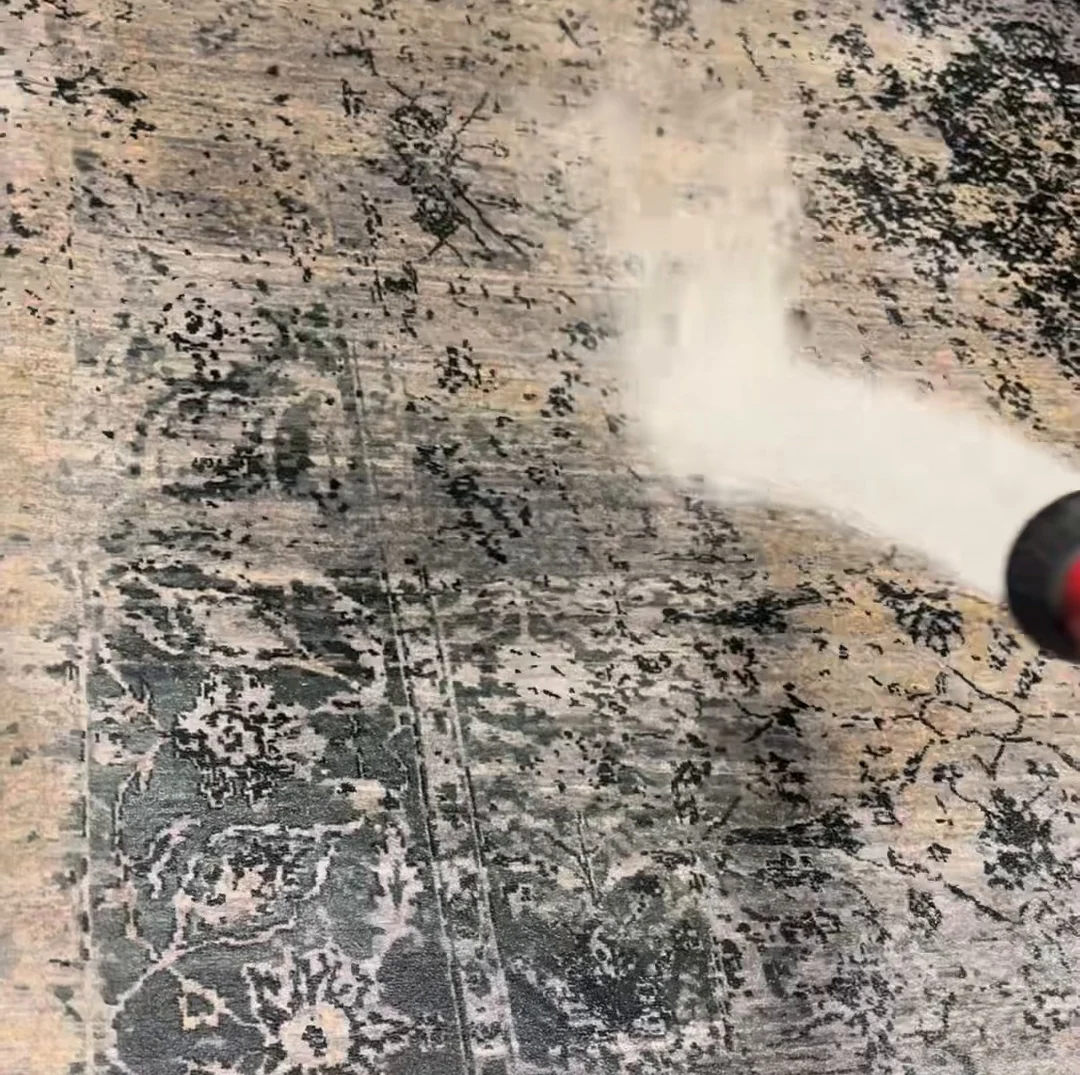
- Dry soil removal (dusting). We remove the dust, sand, hair and grit that vacuuming can’t reach. Grit grinds fibers like sandpaper, so this step also protects the rug.
- Pre-treatment. Spots, traffic lanes and pet areas get treatments chosen for the fiber and the problem.
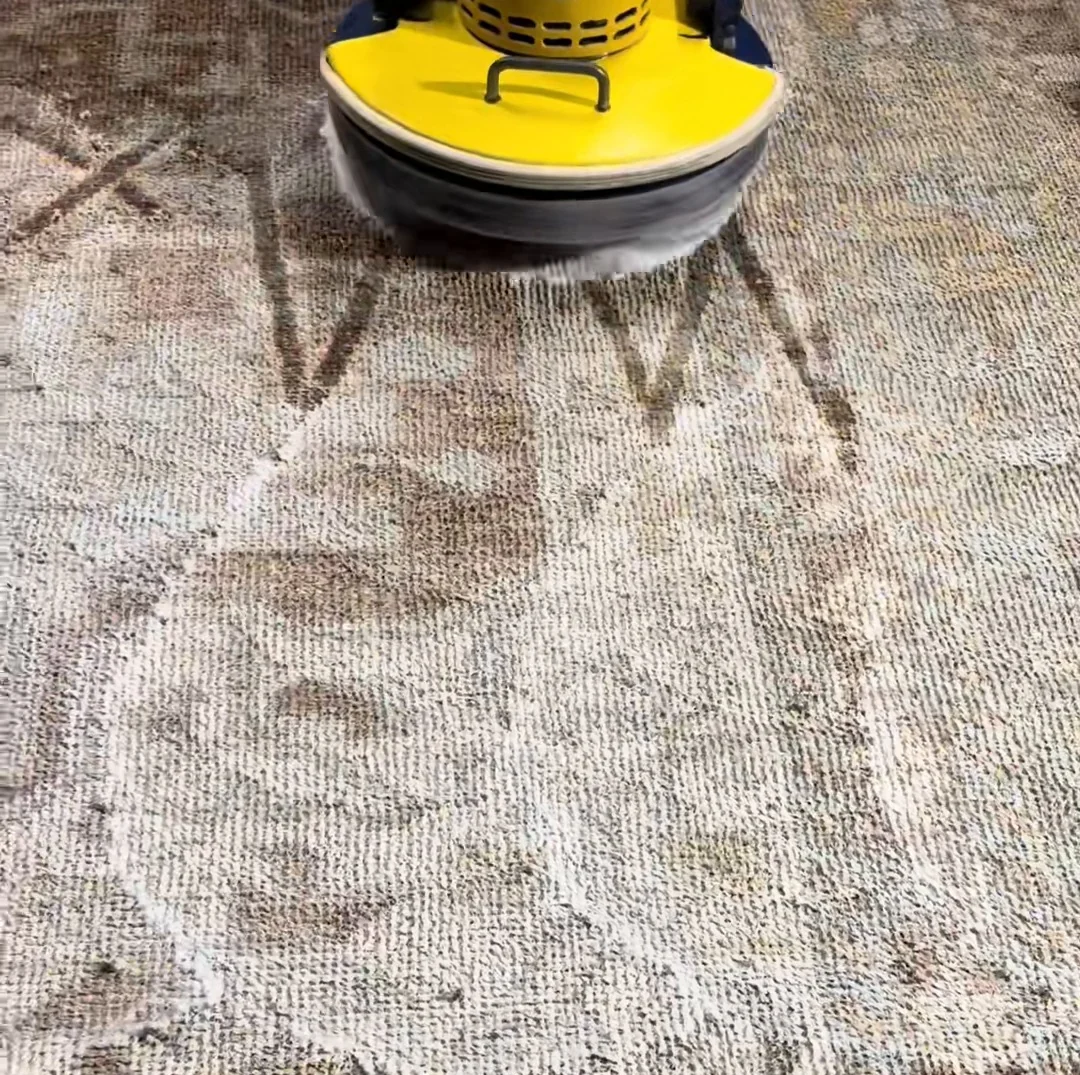
- Controlled wash. Controlled washing selected for the rug, including full washing and flushing where appropriate, so the solution reaches below the tips of the pile.
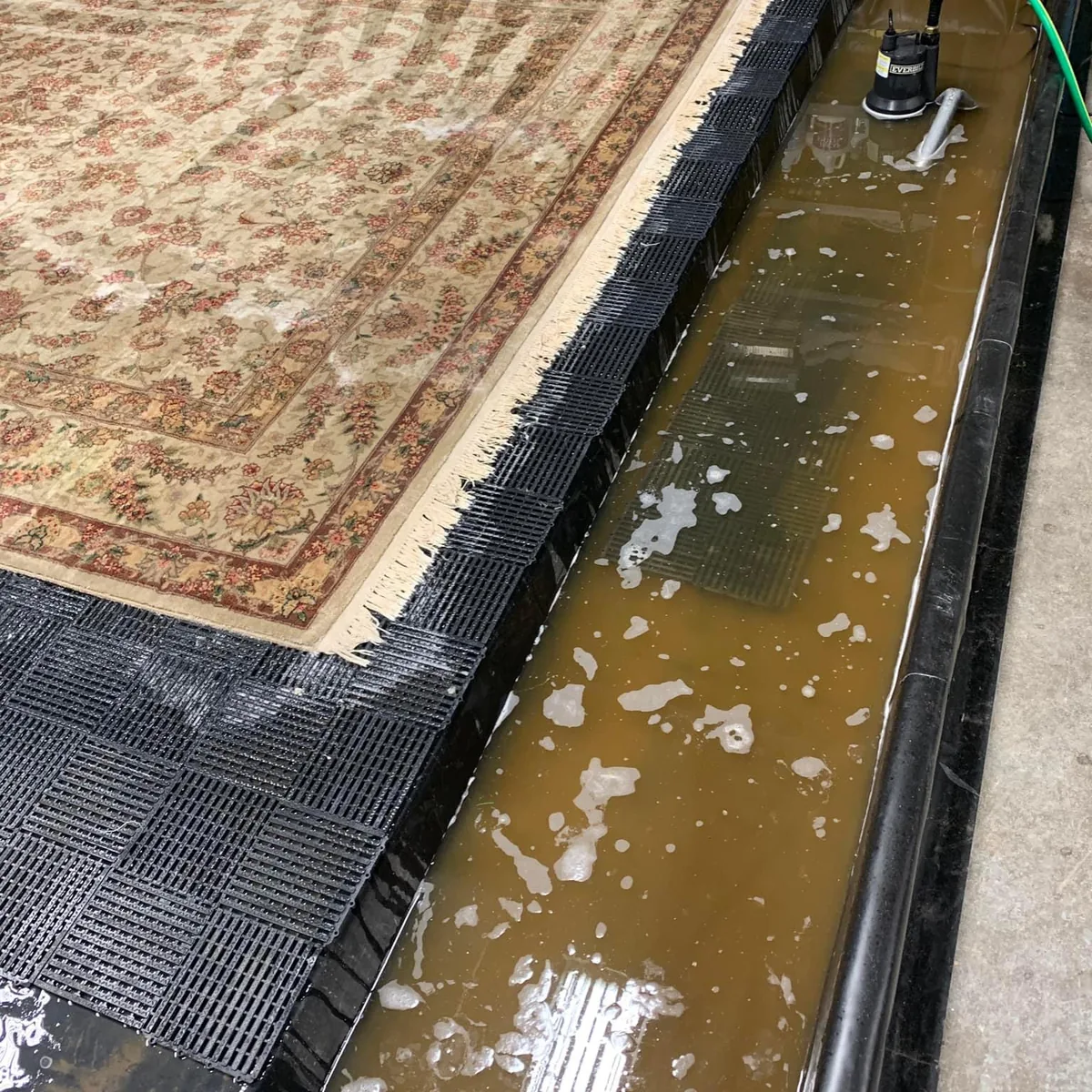
- Urine flush. Where appropriate, rugs with pet accidents are flooded and flushed repeatedly to carry urine salts out of the foundation.
- Rinse. We rinse until the residue is gone. Leftover soap attracts soil.
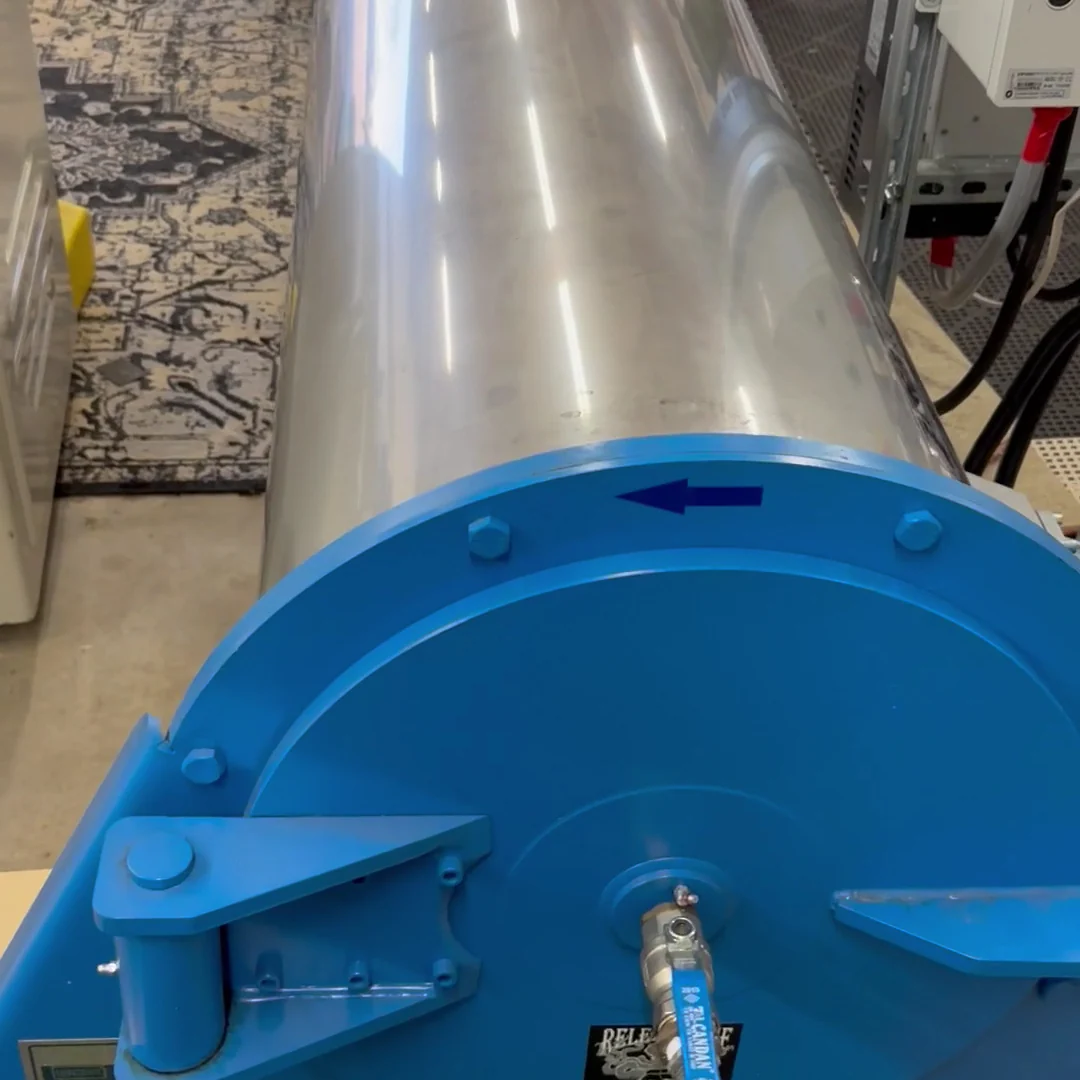
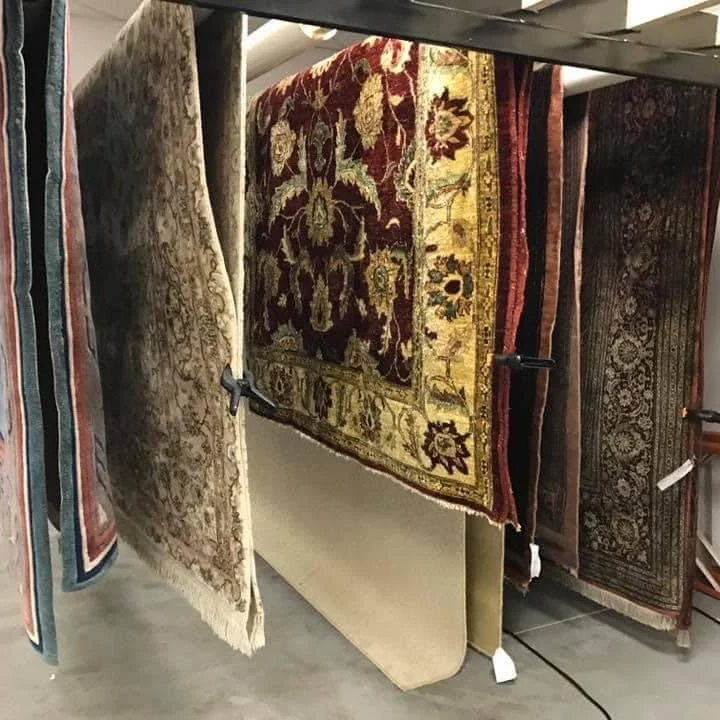
- Controlled drying. The rug is dried evenly under controlled conditions, which helps keep dyes from moving, prevents browning and avoids mildew odors.
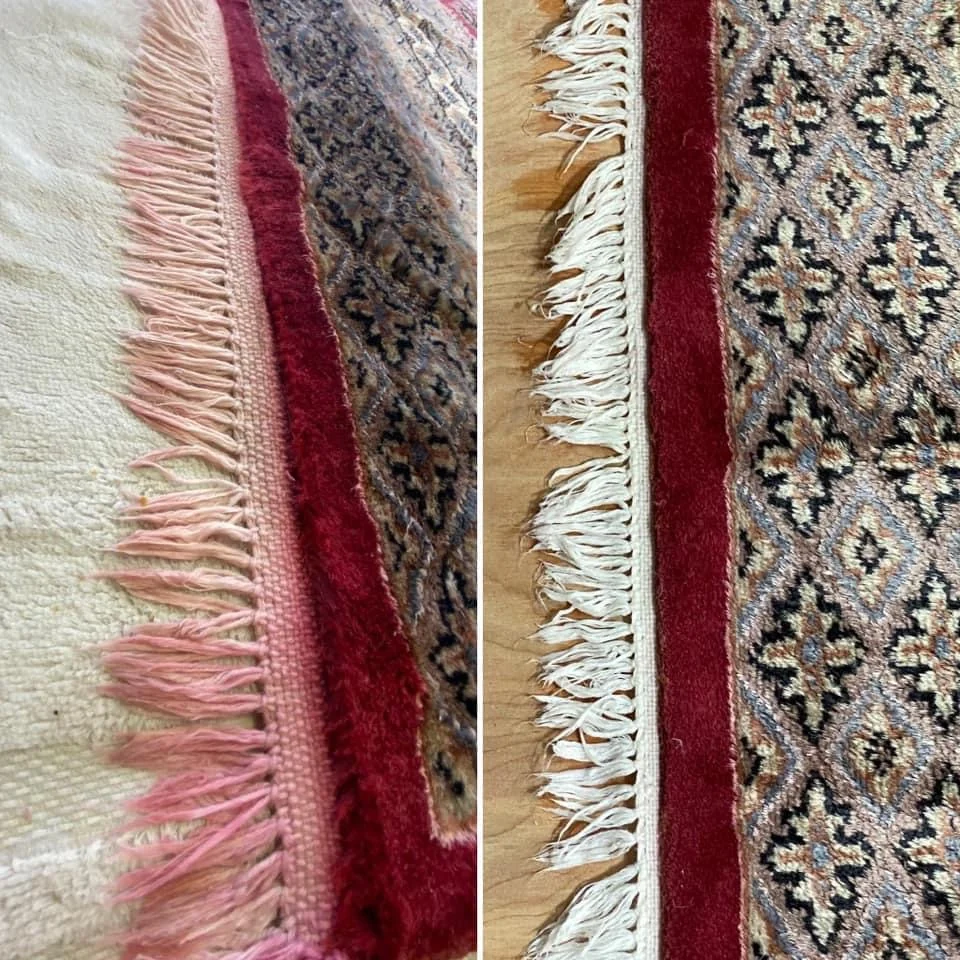
- Fringe grooming. Fringe is cleaned and combed straight, and the pile is groomed so it lies evenly.
- Final inspection. We check the rug again, front and back, before it leaves the plant.
- Wrapping and delivery. Your rug is rolled, wrapped for protection and delivered back to your home.
Pet Urine in Rugs: Why Sprays Fail and How We Flush It Out
Pet accidents are among the most common reasons Nashville homeowners call us for rug cleaning.
Where the Urine Really Goes. Urine doesn’t stay where you see it. It runs down through the pile, spreads sideways along the foundation threads and soaks into the pad, and sometimes the floor underneath. The contaminated area is often much larger than the visible spot. Pets often return to the same spots, so many rugs hold layers of old accidents.
Why Sprays and Spot Cleaning Don’t Work. Store-bought sprays and enzyme products treat the top of the pile. They rarely reach the foundation, and the extra liquid can spread urine deeper and wider. As urine dries, it leaves salts that pull moisture from the air, which is why the odor comes back on humid Middle Tennessee days or whenever the rug gets damp. On-floor cleaning has the same limit: it can freshen the face of a rug, but it can’t rinse the foundation or the pad.
Odor and Yellow or Brown Stains. Fresh urine is acidic, but it turns alkaline as it ages. That change can attack dyes and fibers, leaving yellow stains on light wool and cotton, color loss in darker areas, or brown rings where urine and soil wicked to the surface as the spot dried. Repeated accidents can also leave a cotton foundation stiff or brittle.
Our In-Plant Flood-and-Flush Process. During inspection we map the affected areas. Those areas are pre-treated, then the rug is washed with a method selected for the rug, including full washing and flushing where appropriate, so the urine treatment reaches the pile, foundation and backing. We flood and flush the rug repeatedly to carry the urine salts out instead of moving them around, then rinse it and dry it under controlled conditions. In most rugs this removes most of the odor and many of the stains. A pad soaked with urine usually needs replacing, and the floor under it may need its own treatment. For urine in carpet or furniture, see our pet treatment and odor control service.
The Honest Limits. Some urine damage can’t be reversed. Old or repeated accidents can change or remove dye for good, and a weakened foundation can’t be made strong again. Severe contamination may leave some odor even after a full flush. We’ll tell you what we see before we start, so you know what to expect.
Dye Bleeding, Browning and Wicking: How We Protect Your Rug's Color
Color problems are the biggest risk in rug cleaning, and the main reason fine rugs shouldn’t be cleaned like carpet.
Dye Bleeding and Color Run. Dye bleeding happens when a dye loosens in water and moves into nearby areas, like red running into an ivory field or navy spreading into white fringe. It usually follows slow drying or the wrong cleaning solution.
Fugitive Dyes. A fugitive dye is one that was never properly set. Some rugs have a single unstable color, often a red or blue, while the rest of the rug is stable. Fugitive dyes can run after a spill, a pet accident or a leak, not only during cleaning.
Browning and Wicking. Cotton and jute foundations can release brown stains when they stay wet, especially if the rug dries slowly or harsh alkaline cleaners were used. Wicking is when moisture in the foundation travels up to the tips of the pile as it dries, carrying soil, urine or browning with it. That’s why a spot can “come back” after an on-floor cleaning.
How Dye Testing and Controlled Drying Reduce the Risk. We test each color before washing. If a dye moves, we change the wash method, limit the work to dusting and spot care, or tell you that washing isn’t safe. After the rinse, controlled drying takes moisture out of the rug evenly, so dyes and browning don’t have time to migrate. Testing and drying reduce the risk a great deal, but no honest rug cleaner can promise zero risk with unstable dyes.
Pre-Existing Damage. Some rugs arrive with dye that has already bled, sun fading, worn pile, moth damage or dry rot. Abrash, the natural color variation in hand-dyed wool, isn’t a defect and won’t wash out. Cleaning can’t reverse earlier dye bleeding or replace lost fiber, but we’ll point out what we find at inspection.
In-Plant vs. In-Home Rug Cleaning in Nashville: Which Fits?
In-plant cleaning at Silk & Shine Rug Spa is best for:
- Oriental, Persian and other hand-knotted rugs
- Wool, silk, viscose and art silk rugs
- Kilims and flatweaves with bold colors
- Rugs with pet urine, odor or heavy soil
- Antiques, heirlooms and rugs with dingy fringe
In-home cleaning is a good fit for:
- Synthetic, machine-made rugs with light to normal soil
- Rugs cleaned during a carpet or upholstery cleaning visit
- Rugs that only need a refresh between deep washes
For in-home work we use truck-mounted equipment and cleaning solutions selected for the material and used according to manufacturer directions. In-home cleaning refreshes the face of a rug but can’t flush urine from the foundation, so we’ll recommend the plant when needed.
How to Prepare for Pickup
Photos of the front, back and any tag help us recommend the right service. Call (615) 482-5590 or book online.
Before pickup:
- Move small furniture and items off the rug if you can.
- Tell us about pet accidents, past spot treatments, water damage or repairs.
- Keep pets in another room during pickup and delivery.
For more tips, see how to prepare for rug and upholstery cleaning.
Rug Pickup and Delivery Across Middle Tennessee
Our rug cleaning service is based at our Nashville location at 2936 Riverbend Dr, Nashville, TN 37214, and we pick up and deliver rugs throughout the area:
Our Client Reviews


Rug Cleaning FAQs
In-plant rug cleaning at Silk & Shine Rug Spa is $4 per sq ft in our online price book, with a $175 appointment minimum. Size, fiber, construction, condition and any urine or stain treatment can change the price, and we confirm it after inspection, before any cleaning starts.
Yes. We offer rug cleaning pickup and delivery in Nashville, Murfreesboro, Smyrna, La Vergne, Antioch, Bellevue, Donelson & Hermitage, Madison, Brentwood, Franklin, Hendersonville, Gallatin, Mt. Juliet, Lebanon and Clarksville.
Oriental, Persian, hand-knotted, wool, silk, viscose and urine-damaged rugs should be cleaned in-plant. Many synthetic, machine-made rugs can be cleaned in your home with truck-mounted equipment. Send us photos and we’ll recommend the right option.
In most rugs, our in-plant flood-and-flush process removes most of the odor and many of the stains. Old or repeated accidents can leave lasting dye changes or a weakened foundation, and we’ll tell you if we see that before we start.
Urine soaks into the foundation and pad, and sprays only reach the top of the pile. The salts left behind pull in moisture, so the smell returns on humid days. Washing and flushing the rug, where appropriate for its construction, reaches the source.
Every rug is dye-tested before washing. If a color isn’t stable, we change our method or tell you up front if washing isn’t safe. Controlled drying further reduces the risk of dyes moving.
Often, yes, with caution. Our technicians are certified in wool and rayon/viscose textile care. Silk and viscose are fragile when wet and can bleed, yellow or brown, so we test the rug and explain the risks before you decide. Some rugs are better off with dusting and spot care only.
That’s usually browning or wicking. When a cotton or jute foundation stays wet too long, it can release brown stains, and moisture can carry soil to the surface as it dries. A full rinse and controlled drying help prevent it.
We use cleaning solutions selected for the material and used according to manufacturer directions.
Yes. Deep Steam cleans carpet and upholstery in your home with truck-mounted equipment, and our pet treatment service handles urine in carpet and furniture. Ask about adding them when you schedule your rug pickup.
Book In-Plant Rug Cleaning in Nashville Today
Whether it’s a Persian heirloom or a wool rug with a pet problem, Silk & Shine Rug Spa will test it, wash it properly and tell you honestly what to expect. Call (615) 482-5590 or book your rug pickup online.