WATER DAMAGE? CALL NOW — 24/7 (615) 482-5590
CALL 24/7Water Damage Restoration in Nashville & Middle Tennessee
Water extraction, drying and cleanup of carpet, pad and floors after leaks and floods across Nashville and Middle Tennessee. Open 24 hours: (615) 482-5590.
A burst supply line, an overflowing washer, a water heater that finally gives out, or a spring storm that pushes water into the basement: water damage rarely waits for a convenient time. Deep Steam Floor Care & Restoration extracts water, dries homes and businesses, and cleans carpet, pad and floors after leaks and floods across Nashville and Middle Tennessee. We’re open 24 hours. Call (615) 482-5590.
What to Do First
The first hour matters more than people expect. If water is coming into your home right now:
- Stay safe. If water is near outlets, cords or the electrical panel, don’t walk through it. Turn off power to the affected area at the breaker only if you can reach it from a dry spot. If you smell gas or see sagging ceilings, leave and call the utility or 911.
- Stop the water. Shut off the main water valve or the valve for the leaking fixture. Most homes have a main shutoff near the water heater, in a utility closet, or where the line enters the house.
- Call us. The sooner extraction starts, the more carpet, pad and flooring can usually be saved.
- Protect your belongings. Move electronics, papers, photos and small furniture to a dry room. Put aluminum foil or plastic under the legs of heavy furniture so stains don’t transfer to wet carpet.
- Lift what you can. Pull up area rugs and take them off wet carpet, since their dyes can bleed. Hang curtains and furniture skirts up off the floor.
- Take photos. Photograph the water, the source and damaged items before cleanup. They’re useful for your own records and any insurance claim you choose to file.
Request a Service or Emergency Response
What Not to Do
- Don’t use a household vacuum to pick up water. It’s an electrical hazard and won’t remove enough.
- Don’t turn the heat way up to “dry things out.” Warm, damp air without real moisture removal can spread the problem.
- Don’t walk on wet carpet more than you have to. It can stretch and separate from the backing.
- Don’t wait to see whether it dries on its own. Water that soaks into pad, drywall and subfloor stays there long after the surface feels dry.
Our Water Damage Restoration Process
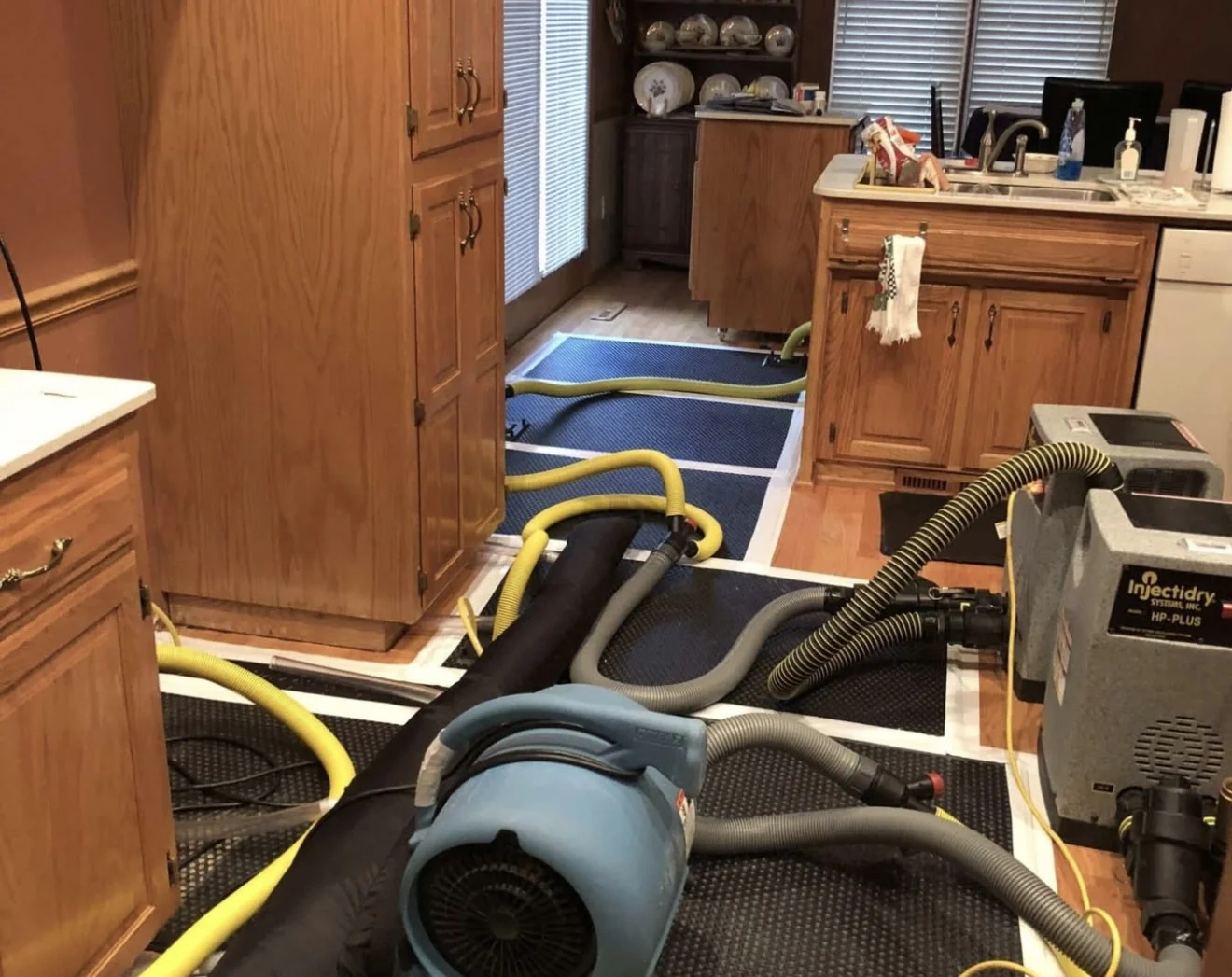
- Inspection and moisture mapping. We find where the water went, including under carpet, behind baseboards and into neighboring rooms. Moisture meters show what’s wet even when it doesn’t look wet.
- Water extraction. Powerful extraction equipment removes standing water and pulls as much as possible out of carpet and pad. The more water extraction removes, the faster everything else dries.
- Carpet and pad decisions. We tell you what can be dried in place and what should be removed. More on that below.
- Drying and dehumidification. Air movers and dehumidifiers dry the structure, not just the surface, and help keep the space stable.
- Monitoring. Moisture readings are taken at regular intervals until materials are dry, so we’re working from readings, not guesswork.
- Cleaning and deodorizing. Once things are dry, carpet, upholstery and hard floors are cleaned so the room is ready to live in again.
- Final inspection. You and your Deep Steam technician walk through together to make sure your concerns have been addressed.
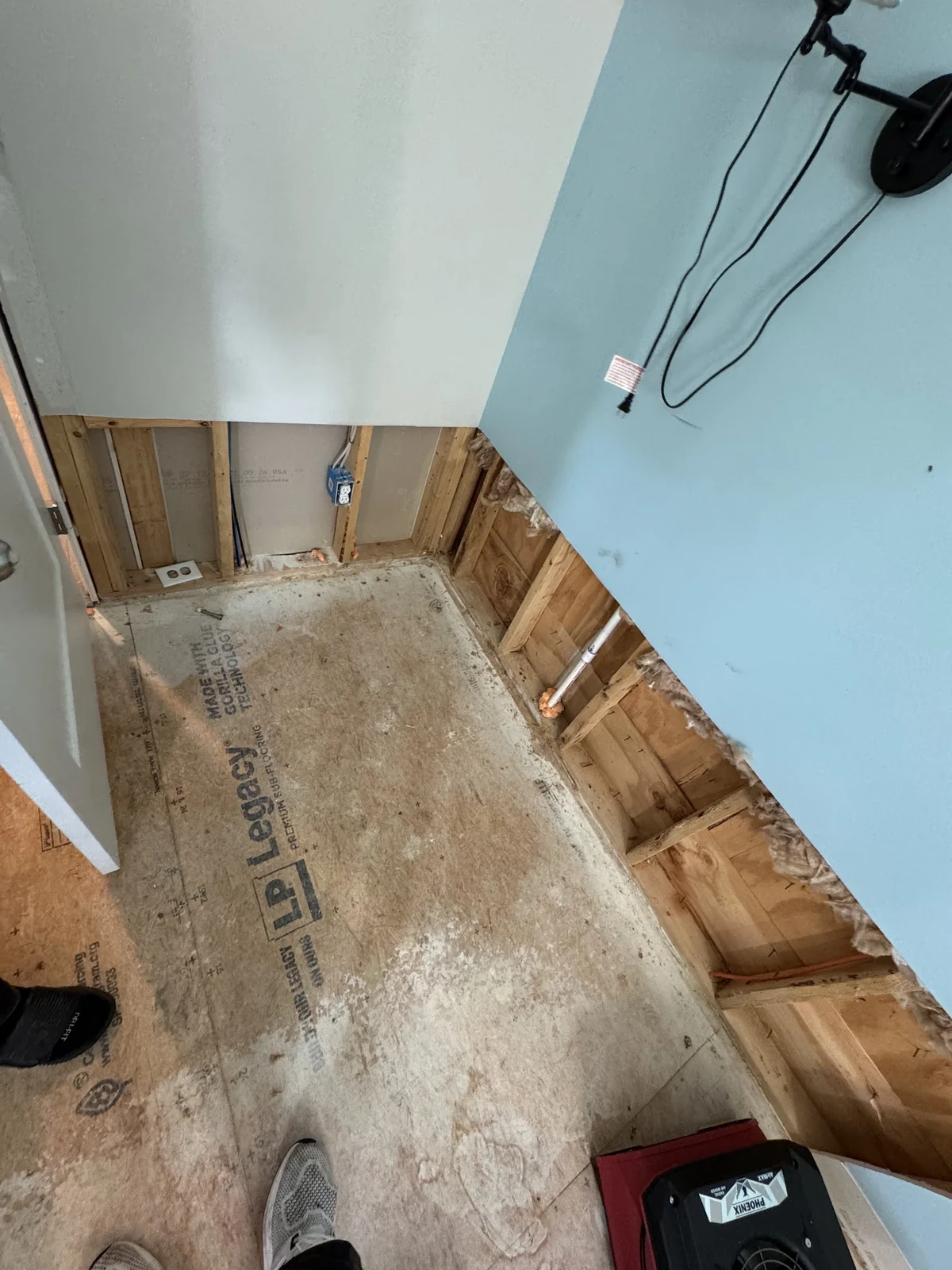
Rebuilding damaged drywall, baseboards or flooring is a separate step.
Carpet and Pad After a Leak or Flood
Carpet is often more salvageable than people think, but the pad is a different story.
- Clean water caught early. When the water came from a clean source such as a supply line, and extraction starts soon, carpet can often be dried in place. Sometimes the pad can be too.
- Pad that has stayed wet. Pad acts like a sponge. If it has been soaked for a long time or has started to smell, replacing it is usually the better call. New pad costs far less than new carpet.
- Delamination. If the backing has separated from the carpet face, or the carpet has stretched and rippled badly, it may need re-stretching or replacement.
- Gray or black water. Carpet and pad soaked with dirty water, from a washing machine drain, a toilet overflow, sewage or floodwater, are usually removed rather than cleaned.
We’ll explain the options in plain terms, room by room, before anything is torn out.
Clean Water, Gray Water and Black Water
Not all water is the same, and the source changes what can be saved:
- Clean water comes from supply lines, faucets and rain coming straight in. It’s the most salvageable, but it gets dirtier the longer it sits.
- Gray water comes from dishwashers, washing machines and sink drains. It carries soap, food and bacteria, so porous materials it soaks need more aggressive cleaning or removal.
- Black water includes sewage, toilet backflow and floodwater from outside. It carries serious contamination, and soaked carpet, pad and drywall generally have to go.
Tell us where the water came from when you call. It helps us bring the right equipment.
Common Causes in Middle Tennessee Homes
We see the same culprits again and again: washing machine hoses, water heaters, refrigerator ice maker lines, dishwasher connections, clogged AC condensate lines during humid summers, and toilet supply lines. Heavy spring and summer storms push water into basements and crawl spaces, and the occasional hard freeze splits pipes in exterior walls and garages. Checking hoses and supply lines every few years is one of the cheapest ways to avoid a big cleanup.
Water Damage and Mold
Wet building materials that don’t dry properly give mold what it needs to grow, and Middle Tennessee humidity doesn’t help. Thorough drying is the best way to prevent it. If a past leak has already left a musty smell or visible growth, see our mold remediation page.
Our Client Reviews


Water Damage FAQs
Make sure the area is safe, shut off the water at the main valve or fixture, move valuables to a dry room, and call (615) 482-5590.
Yes. We’re open 24 hours, including nights and weekends.
Often, yes, if the water was clean and extraction starts soon. Carpet soaked with dirty water, or carpet that has delaminated, usually needs replacing.
Not always. Pad soaked with clean water and dried quickly can sometimes stay. Pad that stayed wet a long time, smells, or was soaked with dirty water is usually replaced.
It depends on how much water there was, what got wet and the weather. We take moisture readings until the materials are dry, and we’ll keep you posted along the way.
Usually not, unless the damage is severe or the water was contaminated. The equipment is noisy, and we’ll talk through what to expect.
That depends on your policy and what caused the damage. Call your insurance company early to ask. Photos taken before cleanup are helpful.
Yes. We extract water, dry the space and clean carpet and floors after storm water. See our storm damage page for more.
Yes. Wet upholstery is cleaned once it’s dry, and area rugs can go to Silk & Shine Rug Spa, our in-plant rug washing facility.
Yes. We handle water damage for both homes and commercial properties.
Call for Water Damage Help
If water is in your home or business right now, shut it off and call (615) 482-5590. Deep Steam Floor Care & Restoration is open 24 hours. Main location: 2936 Riverbend Dr, Nashville, TN 37214.
Serving Nashville, Franklin, Brentwood, Murfreesboro, Smyrna, Clarksville, Antioch, Bellevue, Donelson & Hermitage, Gallatin, Hendersonville, La Vergne, Lebanon, Madison, Mt. Juliet and nearby communities. See all service areas.
Make your home a home again.
Why Deep Steam for Restoration
One local team handles the water, the drying and the cleanup. We use extraction equipment, air movers, dehumidifiers and moisture meters, take readings until materials are dry, and explain each step in plain terms before work begins. We’re open 24 hours for restoration calls across Nashville and Middle Tennessee: (615) 482-5590.